PV Module Production Line Solar Panel Making Machine Tabber Stringer & Laminator and Framing Test and EL Inspection Solar Module Making Machine Price

Customization: Available
Production Scope: Product Line
Automation: Automation

Product Description

Basic Specifications
After-sales Service
Installation and Remote
Capacity
100-600MW
Shift
24h 3 Shift
Production
Solar Panel
Factory Size
8000m2
Solar Cell
156-230mm
Cell Type
Perc Topcon Hjt IBC Hbc Sunpower
Half Cut
1/2 1/3 1/4
Double Glass
Yes
Non Destructive Cutting
Yes
Test
on Line EL and IV Tester
Warranty
1 Year
Certification
CE, ISO
Origin
China
Product Overview
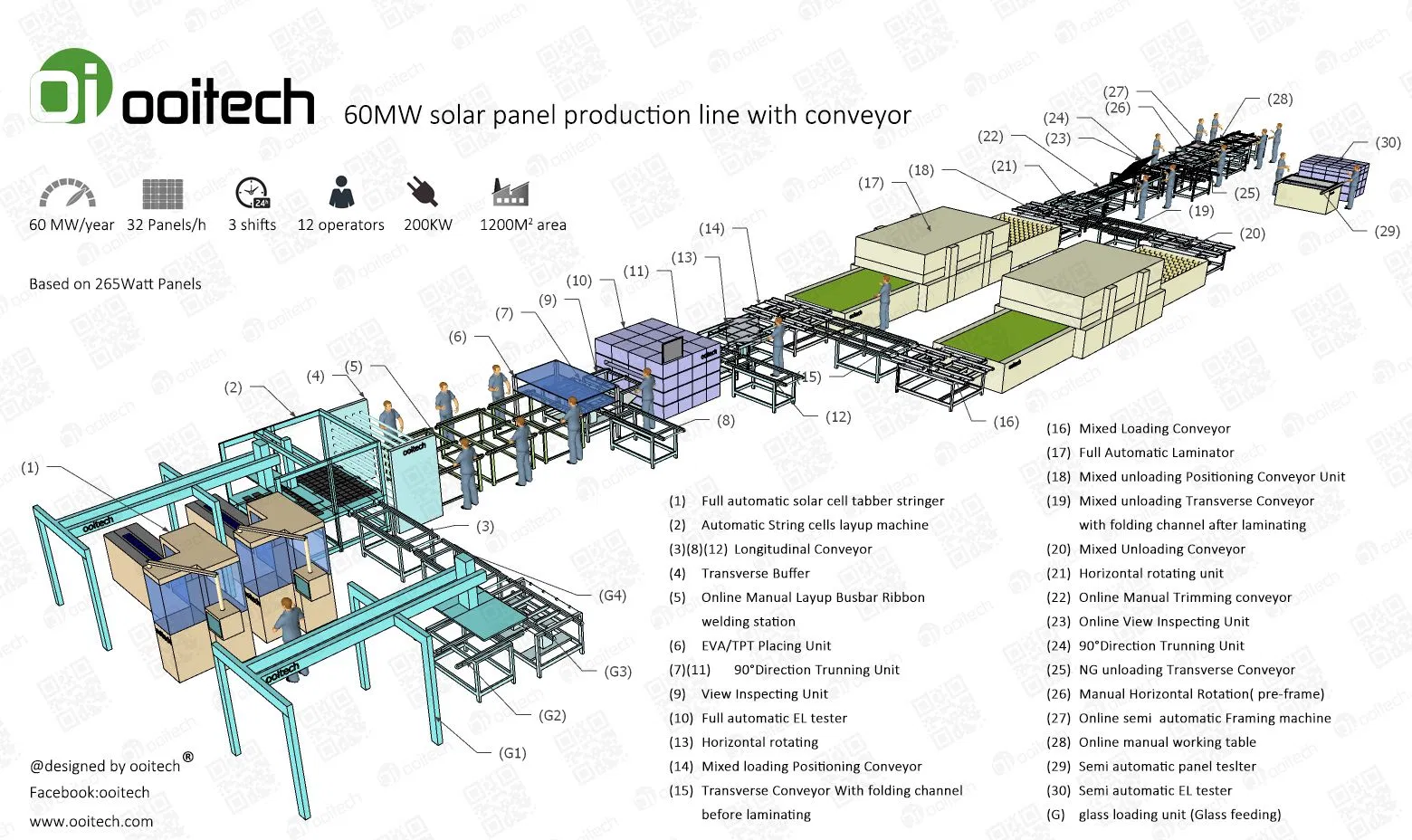
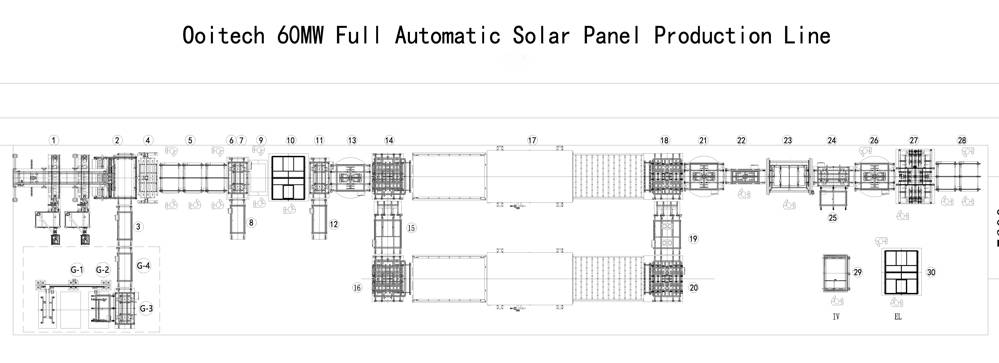
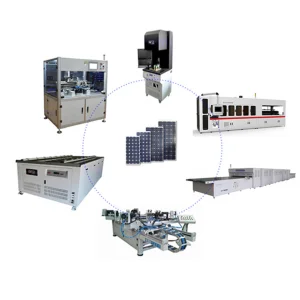
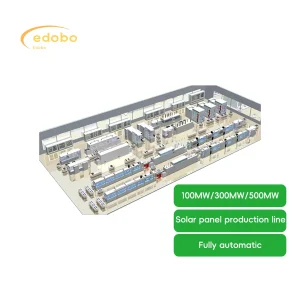
Solar panel production line is a crucial manufacturing process utilized to create solar panels, which serve as vital components in solar energy systems. This production line comprises a variety of specialized machines and equipment, including tabber and stringer machines, laminators, testers, and framing machines. Meticulously designed for consistent quality and high yields, a well-designed line contributes significantly to renewable energy demands.
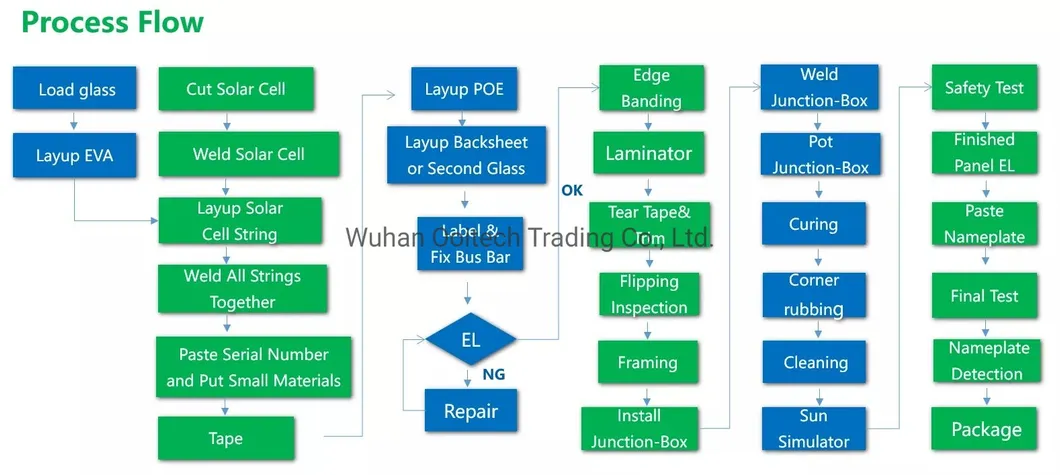
Manufacturing Process Steps
  • Step 1: Test solar cell efficiency for uniformity.
  • Step 2: Laser cut complete cells into small pieces.
  • Step 3: Solder cells into strings using tabber stringer.
  • Step 4: Precision cutting of EVA/TPT based on panel size.
  • Step 5: Automatic lay-up of solar strings on glass/EVA.
  • Step 6: Visual inspection for raw material impurities.
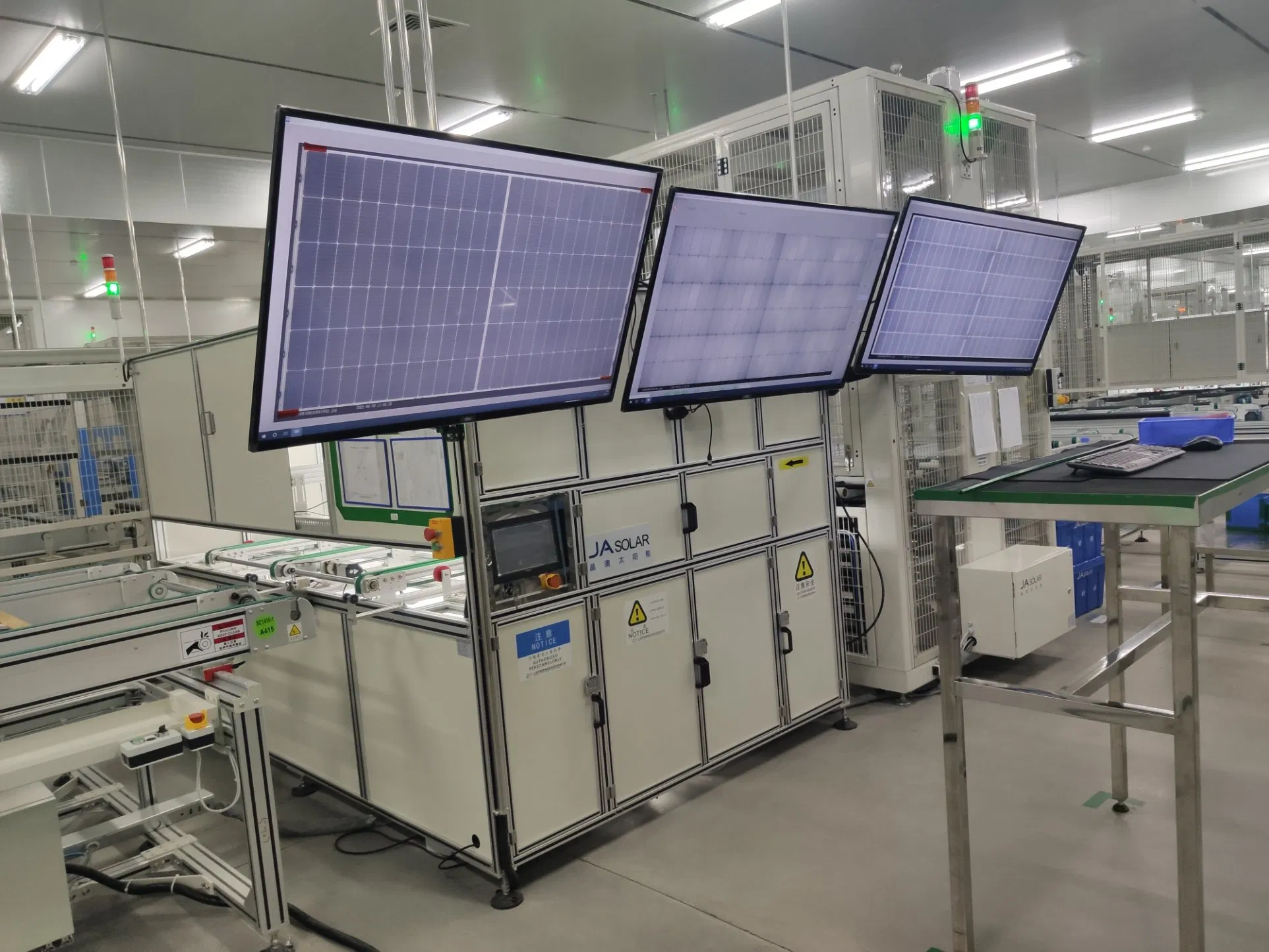
  • Step 7: EL Defect testing for micro-cracks and broken fingers.
  • Step 8: Lamination process to fuse raw materials.
  • Step 9: Trimming of excess edges after cooling.
  • Step 10: Applying sealant for the aluminum frame.
  • Step 11: Automatic framing and installation.
  • Step 12: Final sealant filling after framing.
  • Step 13: Junction box installation and gluing.
  • Step 14: IV Testing for electrical performance (Power, Current).
  • Step 15: Insulation and withstand voltage testing.
  • Step 16: Final EL inspection of finished modules.
  • Step 17: Labeling and identification.
  • Step 18: Surface cleaning and final packaging.
Equipment List & Functions
Step Device Name Working Content
1Solar Cell TesterTest solar cell efficiency for power consistency.
2Laser Scribing MachineCuts cells into small pieces for 3w-140w panels.
3Auto Tabber StringerAutomatic welding of solar cells into strings.
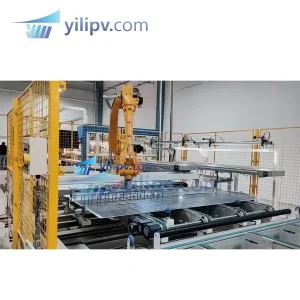
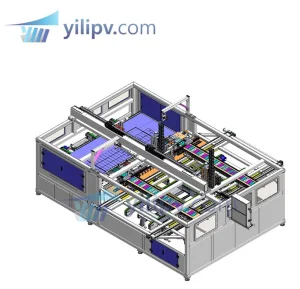
4Automatic LayupAutomatic layup of string cells onto the line.
8EL Defect TesterIdentifies micro-cracks and invisible defects.
9Solar LaminatorLaminates raw materials into a solid panel.
14Solar SimulatorFinal electrical performance and IV testing.
Production Line Gallery
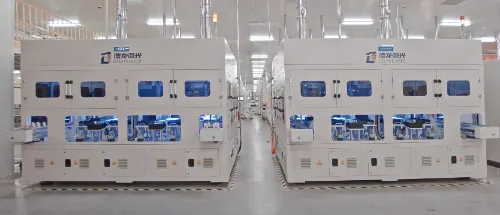
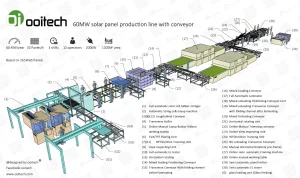
Solar Production Line Overview
Production Process 1 Production Process 2 Production Process 3
Key Machinery Details
NDC Machine
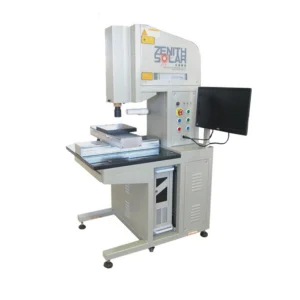
Non-Destructive Cutting (NDC) Machine:

A thermal laser separation machine used for high-precision solar cell cutting without material damage. Compatible with silicon, glass, and metal.
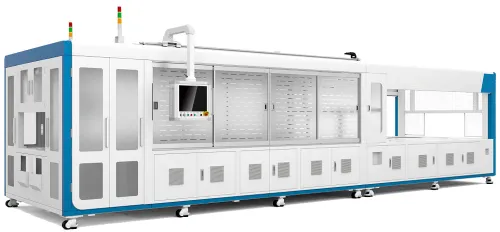
Tabber Stringer
Tabber Stringer:

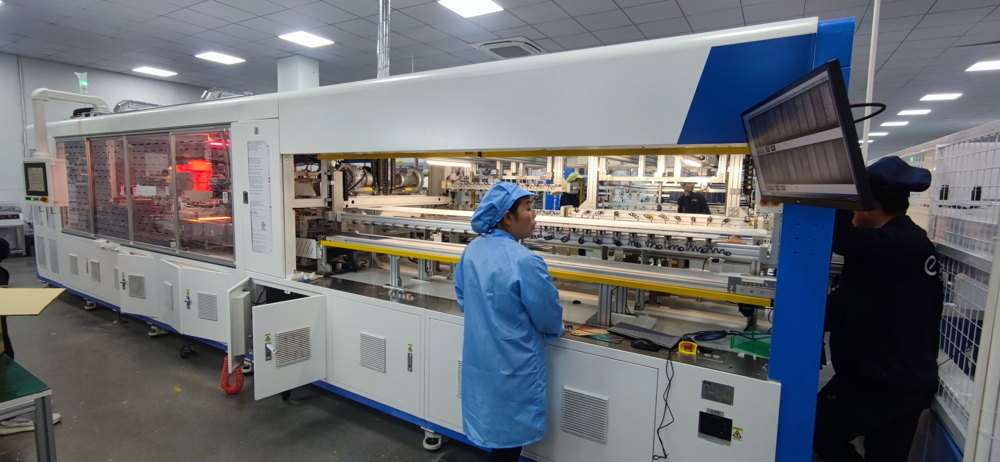
Connects solar cells by soldering thin metal ribbons (tabbing) to the front and back, forming cell strings with electrical continuity.
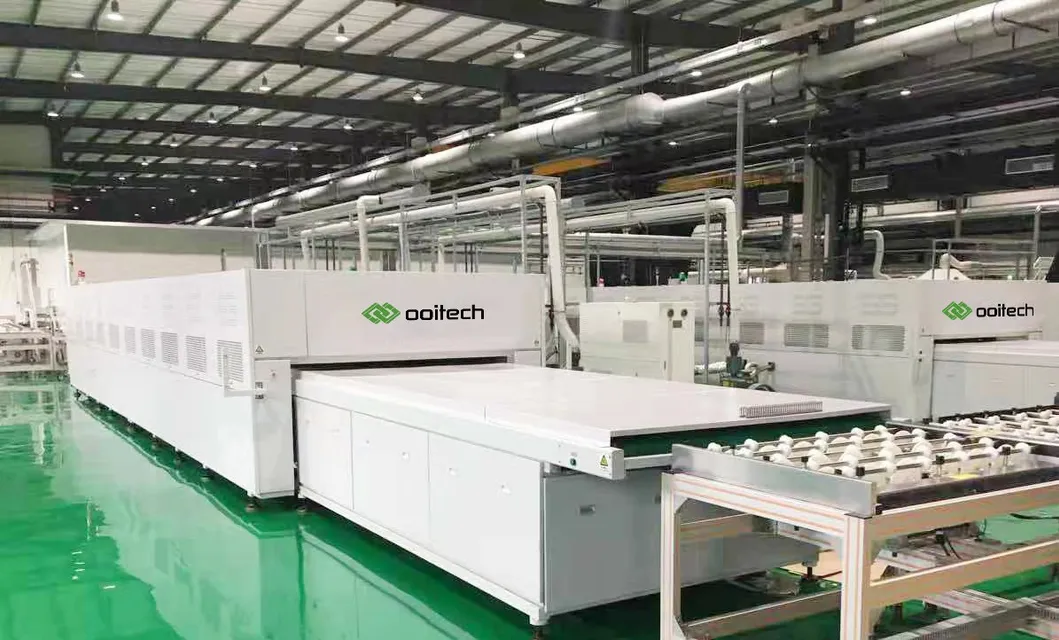
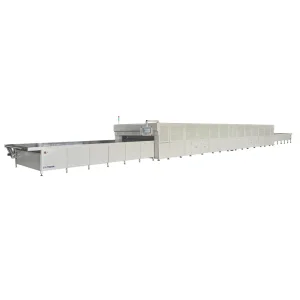
Automatic Laminator
Fully Automatic Laminating Machine:

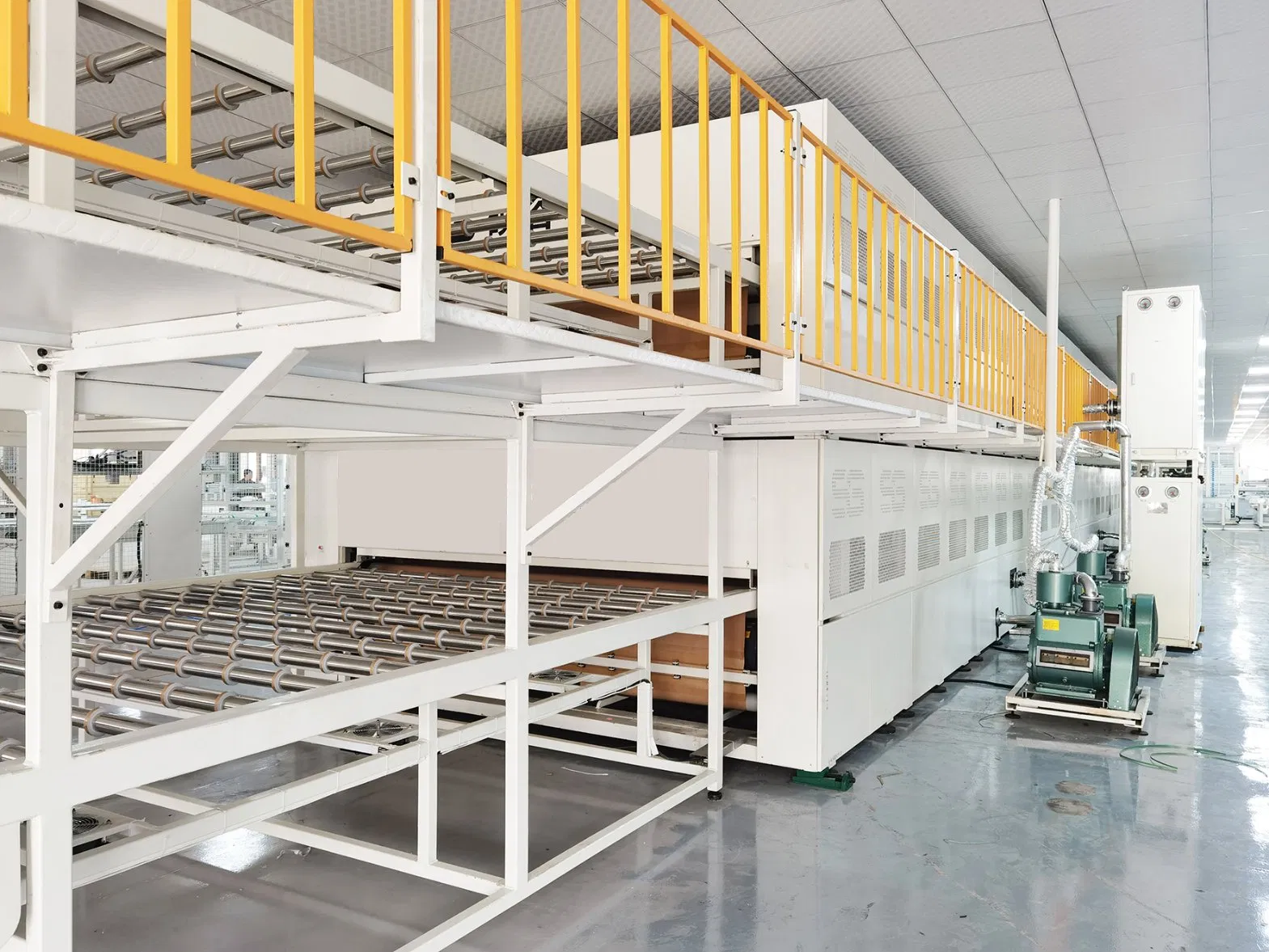
Uses heat and pressure to fuse glass, EVA film, and solar cells into a durable, weather-resistant module.

Technical Specifications
ModelOTHS-PBRPower SupplyAC380V 50Hz
Cycle Time≤ 5s per stringPower Consumption≤ 10kW
Accuracy±0.3mmModule SizeMax 2450*1400mm
Noise Level≤ 60dBHMIEnglish / Chinese
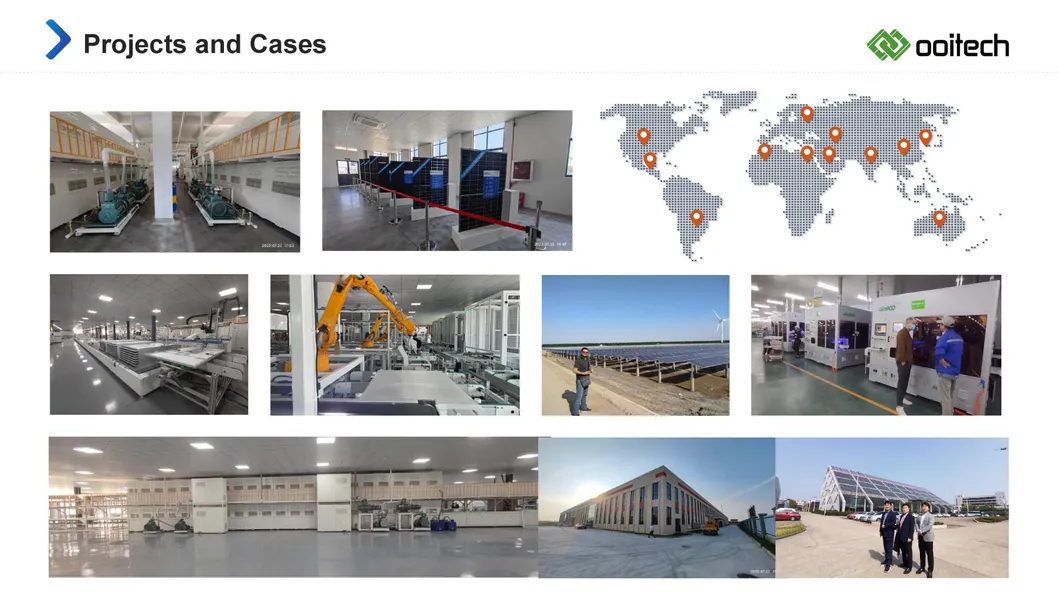
International Project Presence
S/NRegionStatus
1India (Pune, Vadodara, Hyderabad)Operational
2Egypt (Cairo, Suez)Operational
3Russia / KazakhstanOperational
4USA / MexicoOperational
5Germany / Tunisia / SyriaOperational
Frequently Asked Questions
1. What is the annual production capacity of this line? The line is designed for flexible capacity ranging from 100MW to 600MW depending on configuration.
2. Which types of solar cells are compatible with the machines? The equipment supports Perc, Topcon, Hjt, IBC, Hbc, and Sunpower cells ranging from 156mm to 230mm.
3. Does the system support half-cut cell production? Yes, the line is fully compatible with 1/2, 1/3, and 1/4 half-cut solar module manufacturing.
4. How is the quality of the solar panels ensured? We integrate online EL defect testers and IV simulators to detect micro-cracks and measure electrical performance at multiple stages.
5. Is the cutting process harmful to the cells? No, we utilize Non-Destructive Cutting (NDC) technology to ensure cells are separated without thermal or mechanical damage.
6. What is the warranty and after-sales support? We provide a 1-year warranty along with on-site installation and remote technical support.

Related Products