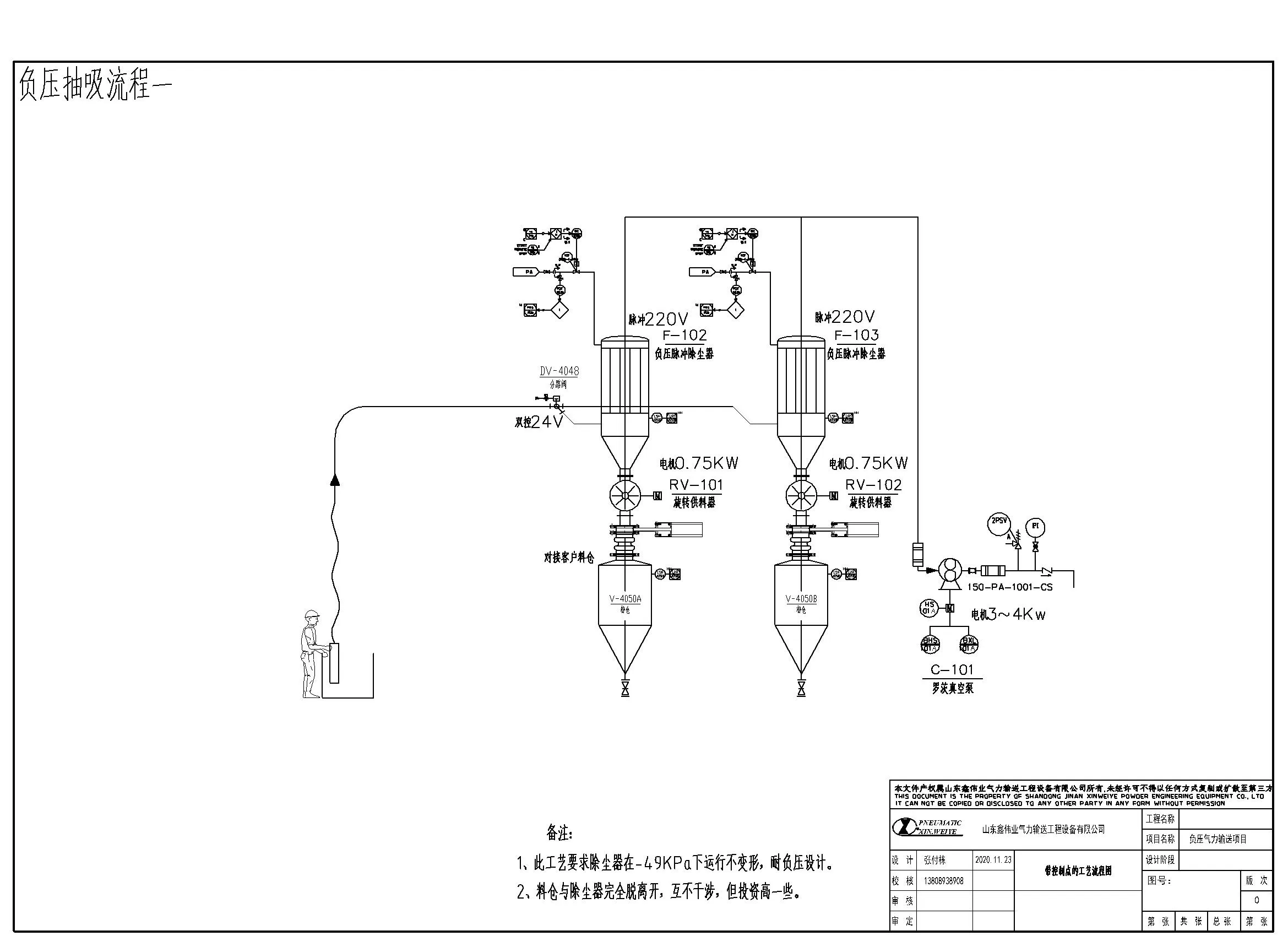
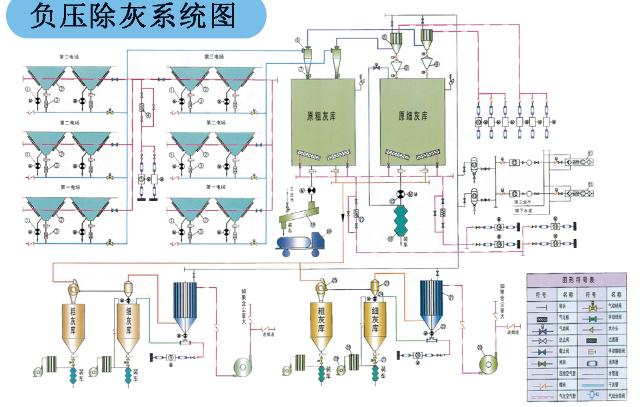
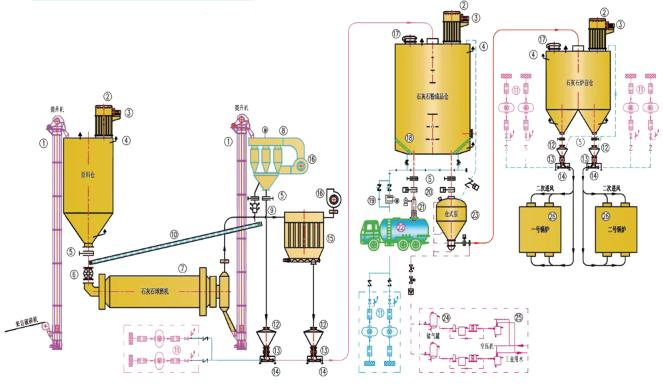
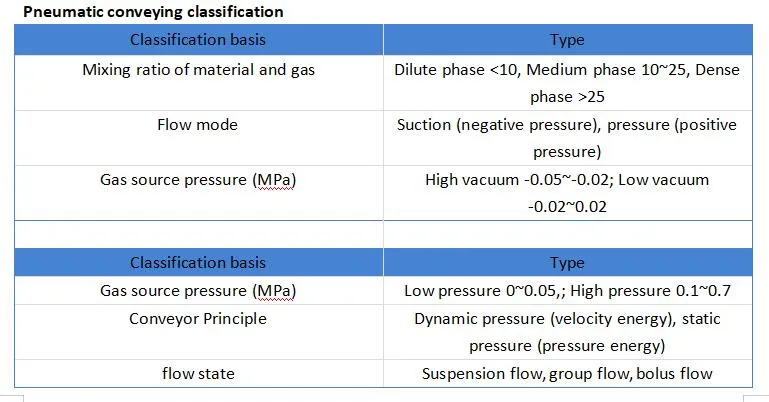
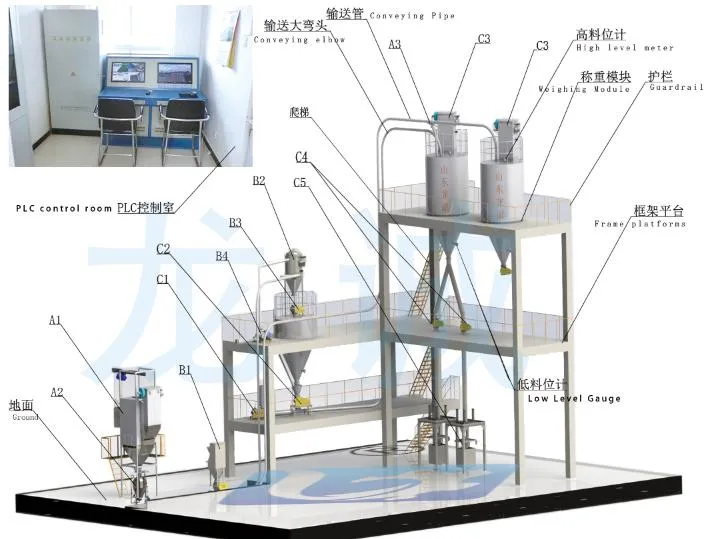
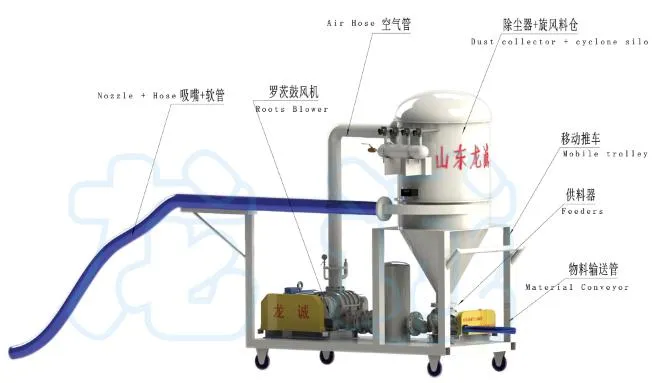
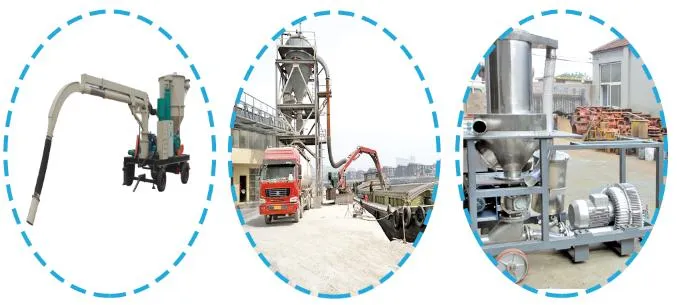
• Composite: Combined suction and pressure systems.
Typical Application Fields
Petrochemical polymers, granules, and powder processing.
Plastic enterprises: storage, feeding, weighing, and mixing.
Metallurgy & Power: Coal ash, desulfurization ash, and dust transport.
Chemicals & Fine Chemicals: Mixing, packaging, and transportation.
Food & Pharmaceuticals: Dosing, crushing, and drying processes.
Grain storage and transfer operations.
Typical Materials for Conveying
Flours
Flavoring Powder
Fishmeal
Maize
Cocoa
Salt
Soybean Skin
Dry Yeast
Cottonseed
Amylum
Sugar
Grain
Glucose
MSG
Limestone
Kaolin
Fertilizer
Cement
Graphite
Silica
Iron Oxide
PET/PVC
Fly Ash
Coal Dust
Detailed Technical Parameters
System Parameters
Transport Vol (t/h)
Pressure (kPa)
Pipe Dia (mm)
Height (m)
Distance (m)
Dense Phase
0.1 ~ 100
100 ~ 600
40 ~ 200
50
1000
Suction Type
0.1 ~ 150
-29.4 ~ -80
50 ~ 300
5 ~ 30
10 ~ 150
Pressure Type
0.1 ~ 100
29.4 ~ 196
50 ~ 250
5 ~ 35
10 ~ 300
Frequently Asked Questions
Q: What are the main benefits of using a pneumatic conveying system?A: It offers a dust-free environment, flexible pipeline routing, lower maintenance due to fewer moving parts, and the ability to automate the entire material handling process.
Q: What is the difference between dilute-phase and dense-phase conveying?A: Dilute-phase uses high velocity and low pressure for lighter materials, while dense-phase uses high pressure and low velocity to move a larger volume of material with less air.
Q: How far can materials be transported using this system?A: Depending on the system configuration, materials can be transported up to 1000 meters horizontally and 50 meters vertically.
Q: Can chemically unstable materials be moved safely?A: Yes, by using inert gases like nitrogen instead of compressed air, the system can safely transport chemically sensitive or unstable materials.
Q: Which industries commonly use these systems?A: Major users include the petrochemical, food processing, pharmaceutical, metallurgy, and grain storage industries.
Q: Is the system environmentally friendly?A: Yes, because the system is completely enclosed, it prevents dust from escaping into the environment, making it a reliable and clean solution.
 FLare Solar