High-precision testing instrumentation, solar pump systems, smart monitoring sensors, and infrastructure hardware engineered for global industrial reliability.
The Paradigm Shift in Photovoltaic Module Quality Assurance, Cell Architecture Transitions, and Advanced Metrology Benchmarks
The global solar energy industry is experiencing an extraordinary technological transformation. As the industry transitions from conventional Passivated Emitter and Rear Cell (PERC) technology toward high-efficiency N-type architectures—including Tunnel Oxide Passivated Contact (TOPCon), Heterojunction (HJT), and Perovskite-Silicon Tandem structures—the precision requirements for PV Module Testing Equipment have escalated dramatically. Global module manufacturing capacity now exceeds several hundred gigawatts annually, requiring rigorous testing regimens to prevent premature degradation, ensure field longevity over 25–30 years, and guarantee financial bankability for utility-scale projects.
Quality verification for photovoltaic modules spans the entire life cycle, from incoming raw material inspection (wafers, solar glass, EVA/POE encapsulants, backsheets) to inline manufacturing quality control, end-of-line certification flash testing, and post-installation field diagnostics. Manufacturers and certification bodies worldwide rely on standardized international protocols such as IEC 61215:2021 (Terrestrial photovoltaic modules - Design qualification and type approval) and IEC 61730 (Photovoltaic module safety qualification), alongside rigorous UL 61730 requirements.
As a leading hub for global photovoltaic manufacturing equipment, China hosts an integrated ecosystem of specialized metrology suppliers. Top Chinese PV testing equipment manufacturers supply state-of-the-art steady-state and pulsed solar simulators, electroluminescence (EL) defect detection systems, climate simulation test chambers, mechanical stress rigs, and electrical safety testers to tier-1 module factories and third-party laboratories (such as TÜV Rheinland, TÜV SÜD, VDE, and UL) across Europe, the Americas, the Middle East, and Asia-Pacific.
Key equipment categories powering modern cell & module production lines, R&D laboratories, and quality assurance facilities.
Utilizing high-intensity Xenon flash lamps or multi-channel LED arrays to replicate true solar spectral irradiance (AM1.5G standard). Essential for accurate Current-Voltage (I-V) curve measurement, maximum power output (Pmax) determination, fill factor calculation, and temperature coefficient evaluation.
High-resolution near-infrared (NIR) camera arrays combined with reverse/forward current biasing to reveal hidden micro-cracks, finger interruptions, soldering defects, crystal dislocations, and PID degradation that are invisible to the naked eye.
Specialized environmental chambers designed for accelerated stress testing, including Damp Heat (85°C / 85% RH for 1000–3000 hours), Thermal Cycling (-40°C to +85°C), and Humidity Freeze testing to validate weatherability.
Automated pneumatic pressure load frames capable of applying static mechanical loads up to 5,400 Pa (snow load) and dynamic wind pressure loading, complemented by high-velocity pneumatic hail launcher cannons to verify physical durability.
High-voltage bias test setups (up to ±1500V or 2000V DC) under high temperature and humidity conditions to measure voltage-induced sodium ion migration and cell efficiency losses.
Automated dielectric breakdown and wet insulation resistance test stations compliance-verified against IEC 61730 electrical safety requirements for global grid connection approval.
Critical performance metrics according to IEC 60904-9 Standard Revision 3 for Class AAA+ Solar Simulators.
In high-throughput photovoltaic manufacturing, measurement accuracy directly impacts revenue. A measurement variance of just 0.5% on a 1 GW production line can represent hundreds of thousands of dollars in misclassified module power ratings. Top Chinese PV testing equipment manufacturers have pushed metrology standards beyond the baseline IEC 60904-9 Class AAA criteria to achieve Class A+A+A+ rating across extended spectral ranges (300 nm – 1200 nm).
| Performance Parameter | IEC 60904-9 Class A Benchmark | Next-Gen Chinese AAA+ Standard | Industrial Significance |
|---|---|---|---|
| Spectral Match | 0.75 – 1.25 | 0.87 – 1.13 (Class A+) | Prevents mismatch errors when testing TOPCon & HJT heterojunction cells. |
| Spatial Non-Uniformity | < 2.0% | < 0.5% - 1.0% | Ensures uniform illumination over ultra-large format modules (2.4m x 1.3m). |
| Temporal Instability | < 2.0% (Short/Long term) | < 0.2% STI / < 0.5% LTI | Guarantees repeatable IV curve sweeps without light intensity ripple distortions. |
| Pulse Width Duration | 10 ms - 30 ms | 100 ms - 200 ms Dynamic Pulse | Essential for eliminating capacitive response artifacts in high-efficiency cells. |
| EL Defect Resolution | 1.3 - 5.0 Megapixels | 20 - 48 Megapixels + AI | Detects sub-micron micro-cracks and multi-busbar ribbon alignment shifts. |
N-type TOPCon and HJT cells exhibit high internal electrical capacitance. When tested using traditional short pulse duration flashers (10–20 ms), the rapid voltage sweep induces capacitive displacement currents, leading to false I-V curve distortion and underestimated Pmax values. Advanced Chinese test equipment incorporates multi-pulse continuous spectrum LED simulation or extended Xenon pulse technology with dynamic bidirectional sweeping algorithms, effectively neutralizing high capacitance effects and ensuring high precision.
Modern production lines operate at speeds of under 18–22 seconds per module. Manual visual inspection of EL images is unfeasible and prone to operator fatigue. Chinese suppliers lead the integration of Deep Convolutional Neural Networks (CNNs) trained on millions of annotated defect samples. These automated systems classify micro-cracks, finger breaks, black cores, ring marks, and soldering displacement in real time with over 99.5% accuracy, triggering automatic sorting mechanisms.
Why leading global solar manufacturers turn to China's manufacturing clusters for PV testing equipment and energy infrastructure solutions.
China produces over 80% of the world's photovoltaic components. This concentration of production has created a robust industrial cluster ecosystem, primarily centered in the Yangtze River Delta region (Zhejiang, Jiangsu, and Shanghai). Chinese equipment manufacturers benefit from direct access to optics, precision optical filters, high-voltage flash circuits, automated mechanics, and advanced vision software development talent.
Ningbo FLare Solar Co., Ltd. is a leading innovator in the solar energy industry, specializing in advanced solar street lights, smart IoT solutions, and LED energy-efficient systems. Headquartered in Ningbo, China, the company has established a strong reputation for delivering high-quality, reliable, and sustainable solar solutions to urban, commercial, and residential clients worldwide. Under its flagship brand, ApexSolar, Ningbo FLare Solar focuses on integrating cutting-edge technology with eco-friendly design to meet the growing demand for smart and energy-efficient lighting solutions.
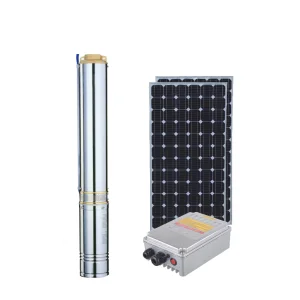
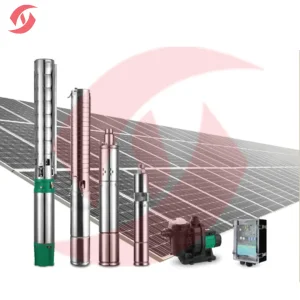
The company’s product portfolio includes solar street lights equipped with IoT-enabled monitoring systems, high-performance LED modules, and durable battery storage solutions. These innovations ensure long-lasting illumination, intelligent energy management, and remote monitoring capabilities, making city infrastructure safer and more sustainable. In addition, Ningbo FLare Solar develops off-grid and hybrid solar pump systems for agriculture and water management, combining efficiency, reliability, and cost-effectiveness.
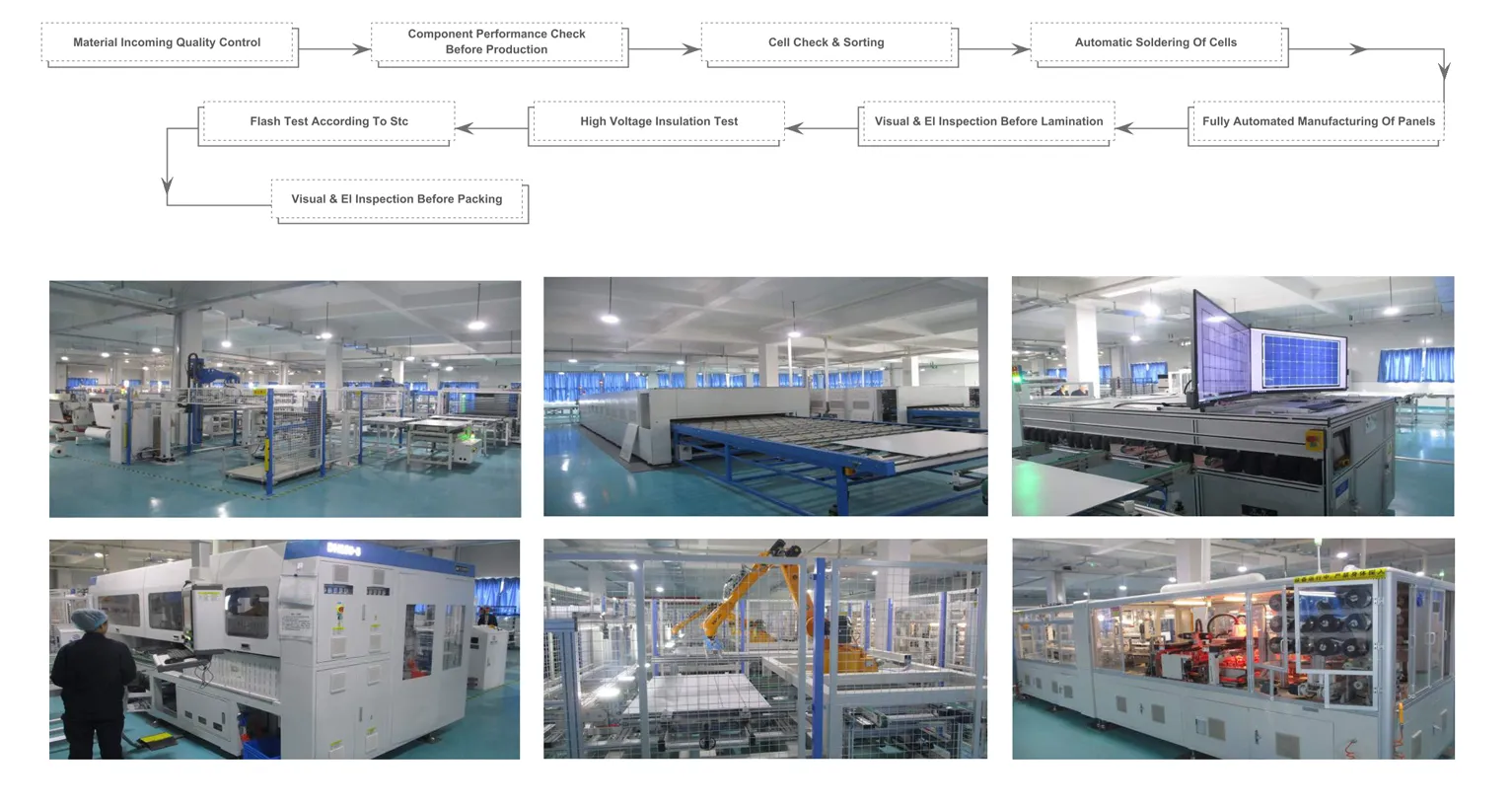
With a dedicated research and development team, stringent quality control standards, and commitment to sustainability, Ningbo FLare Solar Co., Ltd. continually advances solar technology. The company collaborates with global partners, distributors, and municipalities to deliver tailored solutions that reduce energy consumption and environmental impact.
By merging innovation, smart design, and ecological responsibility, Ningbo FLare Solar Co., Ltd. is redefining urban lighting and renewable energy solutions, empowering communities with intelligent, efficient, and environmentally friendly solar systems.
Addressing international regulatory demands, field calibration protocols, and seamless Industry 4.0 factory integration.
International enterprise buyers, EPC contractors, and module manufacturers face distinct technical challenges when procuring testing equipment globally. Ensuring compliance with regional safety standards, maintaining calibration traceability, and integrating equipment into MES environments are vital criteria in supplier selection.
Top Chinese suppliers design equipment to comply with international standards, including CE marking, UL compliance, ISO 9001 quality systems, and ISO 17025 laboratory accreditation frameworks. Testing equipment comes with calibration certificates traceable to national metrology institutes (such as NIM, NPL, or PTB).
Modern equipment features native support for SECS/GEM, OPC UA, and RESTful API communications protocols. This enables direct integration into Manufacturing Execution Systems (MES) and ERP software, allowing automated logging of flash test IV data, EL images, and hi-pot pass/fail records tied to individual barcode/QR identifiers.
Leading Chinese OEMs maintain technical service centers and field engineering teams across Europe, North America, Southeast Asia, and the Middle East. Field calibration kits, reference solar cells (calibrated by Fraunhofer ISE or NREL), and modular spare parts ensure minimal factory downtime under strict SLA terms.
Emerging technologies shaping the future of solar quality control and testing equipment design.
As bifacial modules dominate utility deployments, testing equipment now incorporates dual light sources (front and back lamps) to simultaneously measure rear-side irradiance gain and bifaciality factors in accordance with IEC TS 60904-1-2.
Tandem cell architectures require multi-channel LED light sources capable of independently tuning blue and infrared spectrum wavelengths to avoid current-matching bottlenecks during IV measurements.
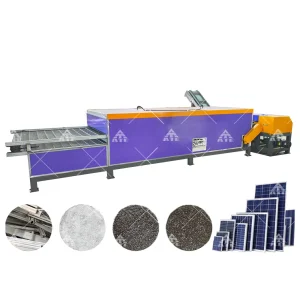
With first-generation PV systems reaching end-of-life, specialized metrology equipment is emerging for rapid sorting of decommissioned modules, evaluating reuse viability versus automated material recycling streams.
Expert answers to key technical, procurement, and operational questions regarding PV module testing equipment.
Explore our extended industrial technology solutions ranging from micro PV modules to recycling lines and solar pumping systems.
 FLare Solar