How to Remotely Monitor Solar Street Light Performance?

Time:2026-05-19 Author:Isabella
0%

In the era of smart cities, the need to enhance solar street light efficiency is rising. One key element is understanding how to monitor solar street light performance remotely. Dr. Emily Sanchez, a renewable energy expert, emphasizes, "Real-time data is crucial for optimizing solar lighting solutions." Her insights highlight the importance of technology in achieving sustainable urban environments.

Remote monitoring provides valuable data on energy production and usage patterns. This information can help identify issues before they become significant problems. For example, if a light is underperforming, timely intervention can be implemented. The challenge lies in ensuring that monitoring systems are reliable and user-friendly.

Many municipalities still struggle with outdated monitoring methods. This can lead to inefficiencies and higher operating costs. It's vital to adopt modern, integrated solutions that offer real-time feedback. However, the technology must be accessible to all stakeholders involved. Overcoming these hurdles will enhance the longevity and effectiveness of solar street lights while promoting smart urban planning.
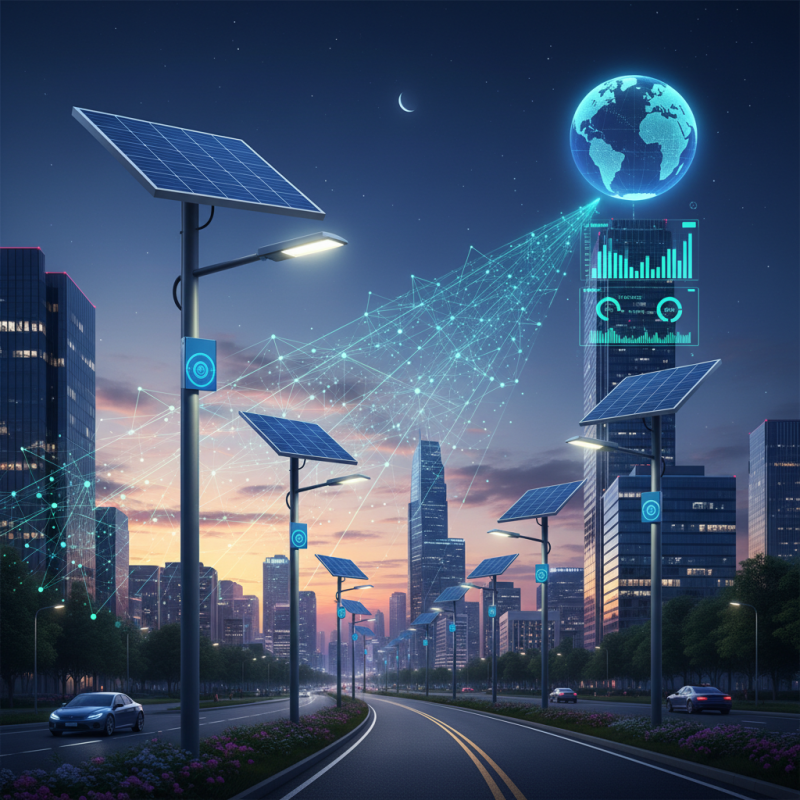
How to Remotely Monitor Solar Street Light Performance?

Understanding Solar Street Light Systems and Their Components

Solar street light systems are increasingly popular for their energy efficiency and sustainability. A typical solar street light consists of several key components: solar panels, batteries, LED lights, and control systems. Each part plays a vital role in ensuring the lights operate effectively throughout the night. Solar panels convert sunlight into electricity, which is stored in batteries. The stored energy powers LED lights after sunset.

The reliability of these systems depends on proper integration and maintenance. Solar panels need to be positioned correctly to receive maximum sunlight. The battery capacity is crucial; insufficient capacity may lead to dim lighting or failure on cloudy days. Control systems should be user-friendly to allow for easy monitoring and adjustments. While many designs look sleek, functionality must not be overlooked.

Monitoring performance can sometimes be flawed. Sensors may fail or reporting can be inaccurate. It’s essential to check the data regularly and address any discrepancies. Periodic maintenance is crucial in preventing unexpected failures. Balancing aesthetics and performance is challenging but necessary for effective solar street light systems.

The Importance of Remote Monitoring for Solar Street Lights

Remote monitoring of solar street lights is crucial for effective performance management. It allows for real-time data collection on energy output, battery health, and light efficiency. Consistent monitoring helps identify issues before they escalate. For instance, if a solar panel is underperforming, the system can alert maintenance teams promptly. This ensures that the lighting remains functional and safe for urban areas.


Understanding the importance of this monitoring system can enhance operational efficiency. Metrics like light output and energy consumption provide insights into overall performance. It also aids in predictive maintenance, saving costs and reducing downtime. However, challenges do exist. Data inaccuracies can occur. Environmental factors, like dust accumulation on the solar panels, may not reflect true performance metrics. Regular site inspections are still necessary for comprehensive assessment.


The reliability of remote monitoring systems relies on their design. Not all systems are user-friendly or provide consistent data. Technical glitches can lead to misinformation. A detailed evaluation of the monitoring technology is essential for optimal results. Investing time in training users is equally important. This ensures that teams can effectively interpret data and respond swiftly to issues.

Key Performance Indicators for Solar Street Light Monitoring

Monitoring the performance of solar street lights relies on key performance indicators (KPIs) that offer insights into their efficiency and effectiveness. One critical KPI is the energy consumption relative to output. Reports indicate that well-optimized solar street lights should consume about 15-20% less energy than traditional lights. Tracking this metric helps in assessing whether the solar technology is delivering on its promise.

Another important KPI is the lumen output. Ideally, each solar street light should maintain a consistent brightness level throughout the night. Research shows that maintaining lumen levels between 300 to 500 lux can significantly enhance visibility in urban areas. However, some installations fail to meet this standard due to inadequate solar panel size or battery capacity, creating issues in low-light environments.

Battery health is also crucial. Regular monitoring of battery voltage and capacity ensures that the system operates efficiently. Inadequate maintenance can lead to a 25% reduction in battery life, negatively impacting performance over time. Addressing these challenges requires continuous assessment and adjustment of systems to meet performance expectations.

Solar Street Light Performance Monitoring

This bar chart displays the performance of solar street lights through the key performance indicators: Energy Produced (in kWh) and Operational Hours over the months of the year. Monitoring these indicators helps in assessing the efficiency and effectiveness of solar street lighting systems.

Technologies and Tools for Remote Monitoring of Solar Street Lights

Remote monitoring of solar street lights has gained traction as municipalities seek efficient management solutions. Technologies such as IoT sensors and wireless communication tools play a crucial role. According to a recent industry report, 72% of cities are adopting smart lighting systems, highlighting the growing need for performance monitoring.

One effective tool is a centralized monitoring system that aggregates data from various sensors. This allows for real-time status updates on battery life, solar panel efficiency, and lighting performance. Data analytics can predict maintenance needs, reducing downtime by up to 30%. However, not all systems are flawless. Integration issues or connectivity problems can lead to data loss.

Tips: Regularly update your monitoring software to fix bugs. Also, consider setting alerts for significant performance drops.

Another essential component is weather monitoring equipment. It helps validate the impact of climate on solar performance. A study showed that solar street lights could produce 20% less energy in overcast conditions. This insight is vital for optimizing power management strategies. Still, one limitation exists: not all systems account for local environmental factors uniformly. Therefore, customizing solutions can enhance reliability.

Implementing a Remote Monitoring System: Steps and Best Practices

Implementing a remote monitoring system for solar street lights involves several critical steps. Start by selecting reliable sensors that capture vital performance data. These sensors can track energy production, battery status, and light output. Regular data collection is key; any missed readings can lead to false conclusions. Think about the frequency of data transmission. It should balance between real-time insights and conserving energy.

Next, invest in a robust communication network. Whether it’s Wi-Fi, cellular, or satellite, the choice depends on the installation location. A weak connection may cause data loss. Once the system is in place, establish a central dashboard for easy access to all information. Ensure it displays alerts for underperformance. These alerts can help in early detection of issues, but they can also overwhelm operators. It’s essential to prioritize key performance indicators to avoid unnecessary noise.

Finally, regularly evaluate the system's efficiency. Analyze the data to find trends and unexpected issues. User feedback is vital–it provides insights into potential improvements. Consider creating a plan for updates and maintenance. This system will evolve and may not always meet initial expectations. Be ready to adapt and refine as needed. Embracing a proactive approach can lead to enhanced performance in the long run.

How to Remotely Monitor Solar Street Light Performance?

Sensor Type Parameter Monitored Data Collection Frequency Status Last Reported
Light Sensor Illuminance (Lux) Every 5 minutes Operational 2023-10-12 14:00
Voltage Sensor Battery Voltage (V) Every 10 minutes Operational 2023-10-12 14:05
Temperature Sensor Ambient Temperature (°C) Every 15 minutes Operational 2023-10-12 14:10
GPS Module Location Tracking Every 30 minutes Operational 2023-10-12 14:20
Light Output Sensor LED Output (lumens) Every hour Needs Maintenance 2023-10-12 13:00

FAQS

: What are key performance indicators (KPIs) for solar street lights?

: KPIs include energy consumption, lumen output, and battery health. They help evaluate efficiency.

How much less energy should solar street lights consume compared to traditional lights?

Ideally, solar street lights should consume 15-20% less energy than traditional lighting systems.

What is the ideal lumen level for solar street lights?

Solar street lights should maintain lumen levels between 300 to 500 lux for adequate visibility.

What can reduce battery life in solar street lights?

Inadequate maintenance or poor monitoring can lead to a 25% reduction in battery life over time.

What is essential when implementing a remote monitoring system?

Selecting reliable sensors is crucial for capturing vital performance data accurately.

Why is data collection frequency important?

Regular data collection ensures accurate insights; missed readings lead to false conclusions.

What type of communication network is necessary?

A robust communication network, such as Wi-Fi or cellular, prevents data loss in remote locations.

How can you ensure easy access to performance data?

Establish a central dashboard that displays alerts for underperformance and key performance metrics.

Why is user feedback significant?

User feedback provides insights into potential improvements for the monitoring system.

What should you be prepared for regarding the monitoring system?

Be ready to adapt and refine the system as performance may not always meet initial expectations.

Conclusion

Monitoring solar street light performance remotely is crucial for ensuring their efficient operation and maintenance. This article outlines the essential components of solar street light systems and emphasizes the significance of remote monitoring in enhancing their performance. It identifies key performance indicators (KPIs) that are vital for effective monitoring, such as energy consumption, battery health, and operational status.

Furthermore, it discusses the various technologies and tools available for implementing a remote monitoring system, providing practical steps and best practices for successful deployment. By understanding these elements, individuals and municipalities can efficiently manage their solar street lights, leading to improved sustainability and reduced operational costs. Overall, gaining insights into "how to monitor solar street light performance remotely" equips stakeholders with the knowledge to optimize their solar street lighting solutions.

Isabella

Isabella

Isabella is a dedicated marketing professional with a sharp focus on driving brand growth and engagement through strategic content creation. With an extensive background in digital marketing, she combines her passion for storytelling with her keen understanding of industry trends to deliver......