When considering sustainable options for agriculture, solar pumps gain attention. Irrigation is crucial for crop success, and utilizing solar energy reduces costs. However, one must ask, how to size a solar pump for irrigation? Sizing is not merely technical; it requires understanding your land and water needs.
To start, evaluate your irrigation requirements. Know the water flow needed to sustain your crops. Each type of crop has specific needs. Assess the daily sunlight in your area too. Not every location experiences the same sunlight duration. This is vital for efficient pump operation.
It's important to consult experts or resources for guidance. Ensure your pump meets both your irrigation and energy needs. Sometimes, miscalculations lead to inadequate water supply. Reflect on your past experiences. Adjust your approach based on what has or hasn't worked. Proper sizing can enhance your agricultural productivity.
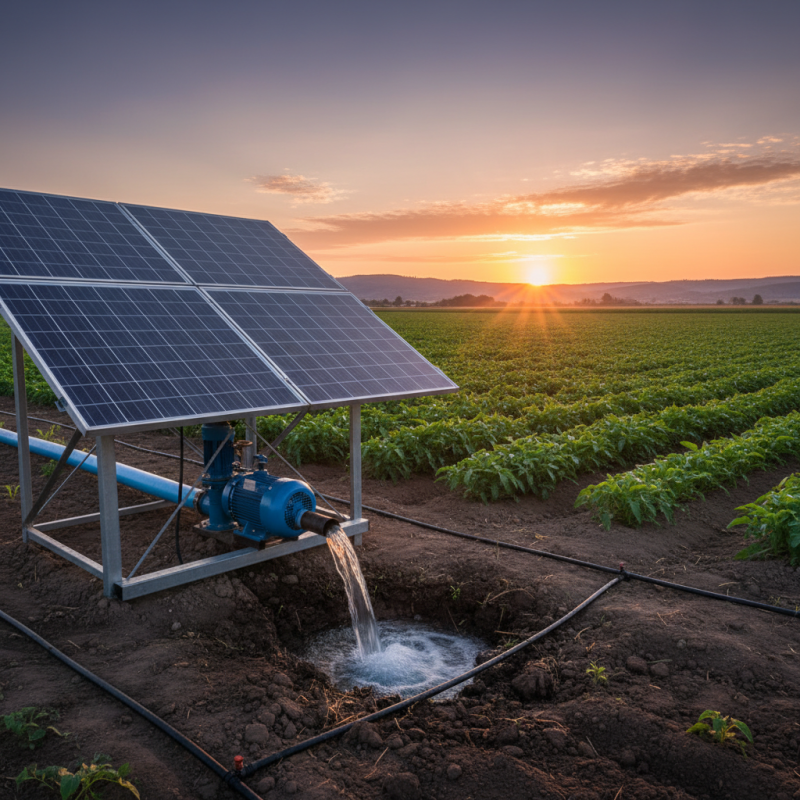
When sizing a solar pump for irrigation, several key factors merit close attention. Understanding the specific water requirements of your crops is foundational. Research suggests that different crops have varying irrigation needs. For instance, corn typically requires around 22 inches of water, while a tomato plant may need about 12 inches. Knowing these figures aids in determining the necessary flow rate for your solar pump.
The total dynamic head (TDH) is another critical factor. It accounts for the height the water must be lifted and friction losses in pipes. A well-documented study from the Irrigation Association states that friction losses can reduce efficiency by up to 30%. Therefore, calculating TDH accurately ensures your system operates optimally. It is essential to consider seasonal variations as well; in some climates, peak demand may coincide with lower solar energy availability.
Lastly, solar panel capacity cannot be overlooked. The array must generate enough power to meet the pump's operational demands. Experts recommend that the solar panel capacity should exceed the pump's requirements by at least 20% to accommodate fluctuations in sunlight. Regularly assessing these parameters can be challenging but crucial for maximizing efficiency and ensuring a sustainable irrigation strategy.
Understanding the water requirements of your irrigated area is crucial for effective irrigation. Every crop has different water needs. For instance, leafy vegetables usually need more water than root crops. Assessing your soil type is equally important. Sandy soils drain quickly, while clay soils hold moisture longer.
Calculate the total area to be irrigated. An area with varied elevations may require more attention. For example, water may not reach higher spots efficiently. Measure the distances to understand how far water needs to travel from the pump. Also, consider seasonal changes. During dry spells, plants may need more watering.
Reflect on the efficiency of your current setup. Are your plants thriving? If not, your water supply might be inadequate. Adjusting the size of your solar pump can make a difference. Each miscalculation can lead to under or over-irrigation. Regularly check your plants’ health. This helps in fine-tuning the irrigation process based on real-time needs.
Selecting the right solar pump for irrigation starts with understanding system head and pressure requirements.
System head refers to the total vertical distance the water needs to be pumped. It includes the elevation of the water source, as well as any height differences in your irrigation layout.
It is crucial to measure these distances accurately. If not, the pump may be undersized or oversized, leading to inefficiency.
Pressure is another key factor. It affects how effectively water can be distributed throughout your irrigation system.
To calculate the needed pressure, consider the type of irrigation method used. Drip systems often require lower pressure than sprinklers.
Improper calculations here can lead to issues like clogged emitters or uneven watering. Reflecting on your system's pressure needs can save time and resources.
Sometimes, the calculations might seem straightforward. However, many overlook factors like friction loss in pipes or fittings.
This small oversight can dramatically impact pump performance. Taking the time to account for these variables leads to a more reliable irrigation system.
Engaging with local experts can also provide insights, aiding in a well-informed decision.
When selecting a solar pump for irrigation, the output of solar panels is crucial. Accurate evaluation ensures the pump operates efficiently, maximizing water delivery. Studies show that solar panel output varies based on sunlight conditions. For instance, daily sunlight can range from 4 to 6 hours, affecting overall energy production.
A key point is compatibility between solar panel capacity and pump requirements. Typically, a solar pump needs about 1.5 to 2 times the power output of the solar panels. If a pump requires 500 watts, at least 750 to 1000 watts of solar panels are recommended. This calculation accommodates inefficiencies and varying light conditions.
Monitoring performance can be challenging. Fluctuating weather conditions and seasonal changes impact panel output. For instance, during cloudy days, energy production may drop significantly. It's essential to assess these factors continually. Regular checks can prevent system failures and ensure adequate irrigation flow. Adjusting the setup based on real-time data leads to better outcomes in crop yields.
When considering the budget for a solar pump system, upfront costs are just one part of the equation. According to a recent industry report, solar pumping systems can range from $1,500 to $15,000, depending on size and specifications. However, long-term savings on energy bills can offset these initial expenditures. Many users underestimate maintenance costs, which typically hover around 5-10% of the initial investment annually.
Regular maintenance is crucial for efficiency. Neglecting service can lead to decreased performance and increased energy consumption. Routine checks can improve longevity and operational reliability. Reports indicate that a well-maintained solar pump can last over 25 years, a longevity that drives down overall expenses when interpreted in terms of lifetime cost.
Unexpected failures can strain budgets significantly. This reality prompts scrutiny over system design and environmental impact. The continuous need for replacement parts can also fluctuate with material costs and availability. Flexibility in planning maintenance schedules helps navigate these uncertainties. Investing in training for operators ensures they can identify issues early, preventing costly repairs or downtime.
: Different crops require different water levels. Leafy vegetables typically need more water than root crops.
Sandy soils drain quickly while clay soils retain moisture longer, influencing irrigation frequency.
Varied elevations may hinder water reaching higher spots, necessitating careful evaluation of water distribution.
Regularly check your plants' health. If they're not thriving, your water supply might need adjustments.
The output of solar panels needs to match or exceed pump requirements, typically at 1.5 to 2 times the power.
Fluctuating weather affects sunlight exposure. Cloudy days may reduce energy production significantly.
Maintenance can range from 5-10% of initial investment annually, often underestimated by users.
Regular maintenance ensures efficiency and longevity, potentially extending lifespan beyond 25 years.
They can lead to significant unplanned expenses, emphasizing the need for thorough system design.
Training for operators can help identify issues early, preventing costly repairs and downtime.
When considering how to size a solar pump for irrigation, several key factors must be taken into account to ensure efficiency and effectiveness. First, it's crucial to understand the water requirements of the irrigated area, as this will influence the pump's capacity and flow rate. Next, calculating system head and pressure plays a vital role in selecting the appropriate pump, ensuring that it can deliver the necessary water at the required height and pressure for optimal irrigation.
Additionally, evaluating the solar panel output and its compatibility with the pump's capacity is essential to create a cohesive system. Finally, it is important to assess the overall budget and maintenance costs associated with solar pump systems to ensure long-term sustainability. By addressing these components comprehensively, one can effectively determine how to size a solar pump for irrigation that meets specific agricultural needs.

FLare Solar