As cities increasingly adopt solar street lights for sustainable illumination, understanding their upkeep becomes vital. Industry expert Dr. Emily Sanders states, "Proper maintenance ensures solar street lights excel throughout their lifespan." This statement rings true in a world where these lights must endure harsh weather and heavy usage.
What maintenance do solar street lights require? Regularly checking for dirt accumulation on solar panels is critical. Dust and debris can significantly diminish solar absorption. Additionally, battery assessments are essential. Malfunctioning batteries can lead to reduced brightness or complete failure. Keeping track of these aspects can improve both performance and longevity.
Moreover, periodic visual inspections can identify possible mechanical issues. Broken structures or loose fittings might need immediate attention. While solar street lights are designed for low maintenance, neglect can lead to unforeseen challenges. A proactive approach can help maintain their efficiency and appearance, fostering a safer environment for everyone.
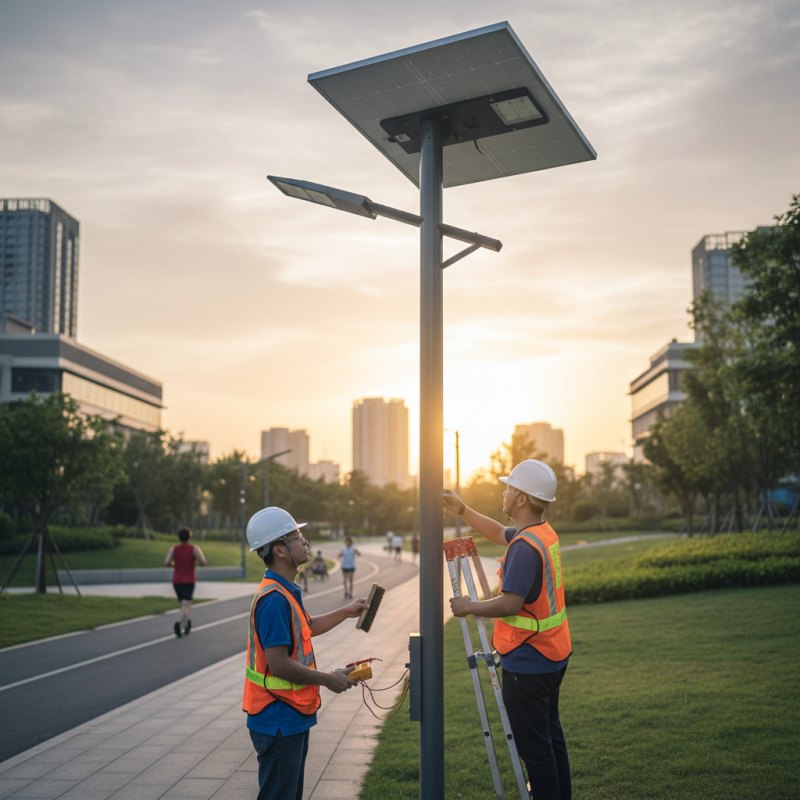
Proper maintenance is crucial for ensuring the longevity of solar street lights. Regularly checking the solar panels is essential. Dust and debris can accumulate, blocking sunlight and reducing efficiency. A simple wipe or rinse can restore their functionality. Scheduled inspections help identify wear and tear early. Look for cracks or discoloration in components.
Battery maintenance is also vital. Over time, batteries lose capacity. Regular monitoring can help ensure they operate effectively. Consider replacing batteries every few years. This proactive approach prevents problems before they arise.
Additionally, check the LED lights for brightness. If they dim, it may signal an underlying issue. Tighten loose connections to enhance performance. Keeping cables clear of obstacles can prevent damage during storms. Taking time for these checks can significantly extend the life of solar street lights.
Proper maintenance is crucial for the longevity of solar street lights. One essential aspect is the regular cleaning of solar panels and fixtures. Dust, dirt, and debris can significantly reduce a solar panel's efficiency. Reports suggest that dirty panels can lose up to 30% of their energy output. Hence, creating a routine cleaning schedule is vital. Ideally, cleaning should occur every few months, especially in areas with high pollution or pollen.
In addition to cleaning, inspecting other components is important. Check for any signs of damage on lenses or fixtures. Additionally, solar batteries should be monitored for wear. Studies reveal that battery life can drop by 20% if not properly maintained. Keeping the sensors clear of obstructions ensures they function correctly. This detail is often overlooked but is essential for optimal performance.
Though maintenance can feel like a chore, neglecting it can lead to long-term issues. Cracks or scratches on solar panels may go unnoticed. These small problems can snowball into significant failures. Regular attention to these details can make a difference in the overall performance and lifespan of solar street lights.
Battery care is crucial for the longevity of solar street lights. These lights rely heavily on their batteries for efficient operation. Regularly checking the battery's health ensures that the lights function properly. Over time, batteries can lose their ability to hold a charge. Identifying signs of wear early can help avoid costly replacements.
When replacing batteries, always choose high-quality options. Pay attention to compatibility with your solar street light system. Improper battery types can cause malfunctions or reduced performance. It's also essential to monitor battery connections. Corroded or loose connections can lead to power issues, affecting light output.
Cleaning the solar panels is equally important. Dust and debris can reduce sunlight absorption. This in turn affects battery charging. A clean panel ensures efficient energy conversion. Routine maintenance checks should include both the battery and solar panels. This holistic approach enhances the overall lifespan of the solar street lights. Remember, neglecting these aspects can lead to diminished performance over time.
Solar street lights require regular inspections to ensure their longevity. It’s vital to check components regularly to identify potential issues early. Inspecting the panels, batteries, and fixtures can prevent costly failures. A monthly check is recommended, especially in harsh weather conditions, to observe any damage.
Common issues include dirt buildup on solar panels, which can significantly reduce efficiency. Regular cleaning can enhance performance. Battery health is another crucial aspect. Watch for signs of corrosion or leaks. Replace batteries every few years, but always consult with a professional if uncertainties arise.
**Tips:** Regularly inspect connections for signs of wear. Replace any corroded components to maintain functionality. Keep a log of inspections and maintenance, noting any problems encountered. This practice helps track patterns and enhances your proactive approach to maintenance.
Seasonal maintenance of solar street lighting systems is vital for ensuring their longevity. Regular inspections can reveal potential issues before they escalate. According to the Solar Energy Industries Association, proper maintenance can extend the lifespan of solar lights by 50%. During spring, check the solar panels for dirt or debris that can block sunlight. Clean them gently to maintain optimal performance.
In winter, ensure that snow or ice does not accumulate on solar panels. Accumulation can significantly reduce energy absorption. The Battery Council International recommends checking battery conditions at least twice a year. Look for swelling, corrosion, or leakage. Such conditions can indicate the need for replacement.
Regular maintenance requires diligence and attention. Neglecting these tasks can lead to reduced efficiency and shorter lifespans. Keeping a maintenance log helps track inspections and issues. This proactive approach guarantees that solar street lighting systems function effectively year-round. Remember, even small actions like cleaning and checking batteries have a big impact.
: Monthly inspections are recommended, especially in harsh weather conditions.
Dirt buildup on panels and battery health are common issues to monitor.
Dirt can reduce efficiency. Regular cleaning enhances performance.
Batteries should be replaced every few years. Consult professionals if unsure.
Check for dirt, ice, snow, and overall battery condition.
Look for corrosion, swelling, or leaks as indications of battery issues.
It can lead to reduced efficiency and shorter lifespans for the lights.
Yes, tracking inspections and problems helps in proactive maintenance.
Simple tasks like cleaning panels and checking batteries are crucial.
Costly failures and a decrease in the overall function may result.
What maintenance do solar street lights require is essential for ensuring their longevity and effectiveness. Key maintenance tasks include regular cleaning of solar panels and fixtures to remove dust and debris, which can hinder energy absorption. Additionally, proper care of the batteries, including monitoring their health and replacing them as needed, is crucial for sustaining optimal performance.
Inspection should be conducted routinely to identify and address common issues such as loose connections or damage to components. Seasonal maintenance also plays a vital role, as it involves checking for weather-related wear and tear, ensuring that the lights function reliably throughout the year. By adhering to these maintenance guidelines, the lifespan and efficiency of solar street lighting systems can be significantly enhanced.

FLare Solar