10 Essential Tips for Maintaining Solar Street Light Batteries?

Time:2026-05-01 Author:Liam
0%

Maintaining solar street light batteries is crucial for maximizing their lifespan and efficiency. According to a report by the Solar Energy Industries Association (SEIA), proper maintenance can increase battery life by as much as 50%. This significant improvement results in cost savings and better performance. Expert, Dr. Olivia Thompson, a recognized authority in renewable energy, emphasizes, "Regular care can significantly enhance battery reliability and decrease long-term expenses."

When considering how to maintain solar street light batteries, it's essential to focus on environmental factors. Batteries are affected by temperature fluctuations, moisture, and dust accumulation. These influences can lead to reduced performance if neglected. Furthermore, battery types vary. Each type may require specific care routines. Therefore, an understanding of the individual battery's needs is key to effective maintenance.

For example, lithium-ion batteries are gaining popularity but need distinct upkeep compared to traditional lead-acid batteries. Exploring these nuances ensures that users can make informed decisions. However, it's common for operators to overlook basic maintenance tasks, which can lead to premature failures. Reflecting on these challenges can inspire improved practices for effective solar street light battery management.
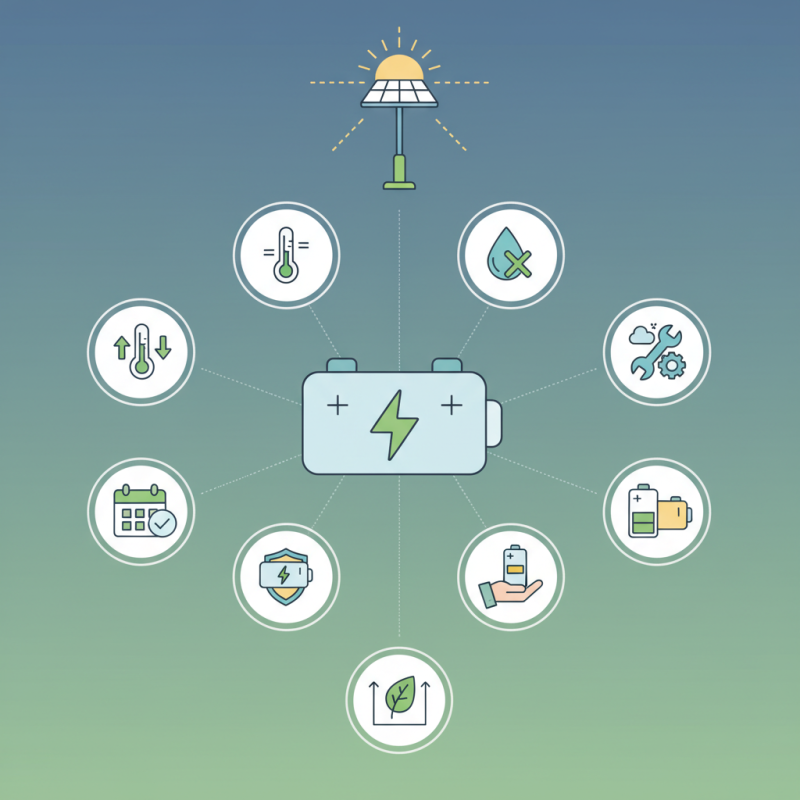
10 Essential Tips for Maintaining Solar Street Light Batteries?

Understanding Solar Street Light Batteries and Their Importance

Solar street light batteries play a crucial role in sustainable urban lighting. They store energy generated by solar panels during the day, ensuring illumination at night. Understanding these batteries is essential for maintaining consistent and reliable lighting. The right battery type influences performance and longevity, as different chemistries serve unique purposes.

Regular maintenance is vital for battery health. Checking connections and ensuring there is no corrosion can enhance efficiency. Over time, battery capacity diminishes. Users may need to track the signs of aging, such as reduced brightness and shorter operation times. A comprehensive understanding of the battery's life cycle can help in decision-making.

Educating yourself about charging patterns can also be beneficial. Batteries that are regularly discharged and fully recharged tend to last longer. Yet, it's easy to overlook this aspect. Many users neglect proper practices, leading to premature battery failure. Keeping an eye on environmental factors is equally important. Temperature extremes can affect performance and lifespan, often unrecognized until it's too late.

Identifying Common Issues in Solar Street Light Battery Maintenance

Maintaining solar street light batteries can be challenging. Many users overlook simple issues that lead to performance drops. One common problem is corrosion on terminals. Regularly check connections. Clean any corrosion with a suitable solution, ensuring a firm connection. This simple maintenance can extend battery life.

Another issue is temperature fluctuations. Extreme cold or heat can reduce battery efficiency. Always ensure batteries are installed in shaded areas. This protects them from overheating during summer months. Likewise, in winter, you can use insulation techniques for added protection.

Battery replacements may also be necessary. Users should watch for signs of swelling or leaks. These indicate deeper issues. Replace batteries immediately to avoid system failures. Documenting battery performance can help identify trends over time. Regular checks and appropriate actions will reduce the chance of unexpected outages.

Routine Maintenance Practices for Optimal Battery Performance

Routine maintenance is crucial for solar street light batteries. Regular inspections can help identify issues early. Check for corrosion on terminals and clean them if necessary. Doing this once every few months can prevent battery failure. Moisture can be harmful, so ensure enclosures are sealed properly.

Battery performance can degrade over time. Monitor the state of charge regularly. If the battery drains quickly, it may need replacement. Some batteries may swell, indicating internal damage. Keep a log of maintenance activities to track performance trends.

Consider temperature fluctuations as they impact battery life. Ideally, keep the battery in a well-ventilated area. Extreme temperatures can lead to reduced efficiency. If possible, shade the battery from direct sunlight. Periodic testing of the battery’s voltage is also beneficial. Unexpected drops in voltage might signal the need for action. Pay attention to these details for better longevity.

Best Practices for Extending the Lifespan of Solar Batteries

To extend the lifespan of solar batteries, proper maintenance is essential. Regular inspections can prevent unexpected failures. Check connections for corrosion, as this can impede performance. Ensure that solar panels are clean. Dust and debris can block sunlight, reducing efficiency. When dirt accumulates, it can lead to battery strain and premature failure.

Temperature plays a crucial role in battery life. Extreme heat or cold can decrease performance. Storing batteries in a climate-controlled environment when not in use is beneficial. Additionally, avoid draining the battery completely. Deep discharges can shorten its lifespan significantly. Consider a charging schedule that keeps the battery between 20%-80% state of charge.

Monitoring voltage levels is also important. Keeping an eye on this can prevent overcharging or undercharging. Regularly update your maintenance routine based on seasonal changes. Some techniques may need adjustment during different weather conditions. As practices and technologies evolve, staying informed is key. Aim for continuous improvement in your maintenance approach.

10 Essential Tips for Maintaining Solar Street Light Batteries
Tip No. Tip Description Frequency Expected Outcome
1 Regularly clean solar panels to remove dirt and debris. Monthly Improved sunlight absorption.
2 Check battery connections for corrosion or wear. Quarterly Ensures efficient energy transfer.
3 Test battery voltage regularly using a multimeter. Monthly Identify possible battery issues early.
4 Avoid deep discharges of the battery. Always Prolong battery lifecycle.
5 Store batteries in a cool, dry place when not in use. As needed Prevent thermal damage.
6 Monitor and maintain optimal charging levels. Weekly Ensure batteries are properly charged.
7 Replace old batteries with efficient models. Every 3-5 years Enhanced performance and reliability.
8 Ensure the charge controller is functioning properly. Monthly Prevents overcharging/undercharging.
9 Inspect the solar light's overall condition. Monthly Identify other maintenance needs.
10 Check for signs of physical damage to the unit. Monthly Ensure safety and functionality.

When to Replace Solar Street Light Batteries for Continued Efficiency

Replacing solar street light batteries at the right time is crucial for optimal performance. According to a report from the Solar Energy Industries Association, battery efficiency can decline significantly after three years of usage. Commonly, lithium-ion batteries can last four to five years, while lead-acid batteries generally require replacement every two to three years.

It is essential to monitor battery performance regularly. Signs of failing batteries include dimming lights and inconsistent performance. Regular checks can prevent costly replacements. Experts recommend testing battery voltage and examining for physical signs of wear. Keeping records of battery life and maintenance history can aid in determining the best replacement cycle.

Additionally, poor weather conditions can affect battery life. In regions with extreme temperatures, batteries may degrade faster. For instance, heat can cause lithium-ion batteries to fail prematurely. A study by the National Renewable Energy Laboratory suggests that temperature extremes can reduce battery lifespan by 30%. Timely replacements will ensure that solar street lights continue to provide effective illumination.

Battery Lifespan and Replacement Schedule for Solar Street Lights

This chart illustrates the expected efficiency of solar street light batteries over a five-year period. As indicated, the efficiency decreases over time, highlighting the importance of monitoring and replacing batteries to maintain optimal performance.

FAQS

: What common issue affects solar street light batteries?

: Corrosion on terminals can reduce performance. Regularly check and clean connections to maintain efficiency.

How do temperature fluctuations impact battery efficiency?

Extreme temperatures can lower battery performance. Install batteries in shaded areas to prevent overheating or excessive cold.

What signs indicate a battery may need replacement?

Swelling or leaks are clear indicators. If these occur, replace the battery immediately to avoid further issues.

How often should solar batteries be inspected?

Inspect batteries every few months. Regular checks help identify problems and prevent failures.

Why is it important to keep solar panels clean?

Dust and debris block sunlight, leading to battery strain and lower efficiency. Clean panels regularly for optimal performance.

What is a good practice for battery charging?

Maintain the battery's charge between 20%-80%. Avoid complete discharges to extend lifespan.

How can moisture affect solar batteries?

Moisture can damage batteries. Ensure enclosures are sealed tightly to protect against moisture.

What should be monitored to avoid system failures?

Keep an eye on voltage levels. Unexpected drops may signal issues that need immediate attention.

How can seasonal changes affect maintenance?

Adjust maintenance routines based on weather conditions. Some practices may need to be adapted throughout the year.

What should users do for continuous improvement?

Stay informed about evolving practices and technologies. Regularly update your maintenance approach for better results.

Conclusion

Maintaining solar street light batteries is crucial for ensuring their efficiency and longevity. Understanding the unique characteristics and importance of these batteries is the first step in effective maintenance. Common issues like improper charging and environmental impacts can diminish battery performance. Therefore, routine maintenance practices, such as regular inspections and cleaning, are essential for optimal functionality.

To prolong the lifespan of solar batteries, it is vital to adopt best practices, including monitoring charge cycles and avoiding deep discharges. Knowing when to replace these batteries is equally important to maintain continued efficiency. By following these guidelines on how to maintain solar street light batteries, users can ensure reliable lighting for public spaces while maximally utilizing their solar energy investment.

Liam

Liam

Liam is a dedicated marketing professional with a profound expertise in the industry, where he excels at highlighting the unique advantages of our core products. With a keen understanding of market trends and consumer needs, Liam frequently updates our company’s professional blog, providing......