Why Choose Between On-Grid and Off-Grid Solar Pumps?

Time:2026-05-22 Author:Oliver
0%

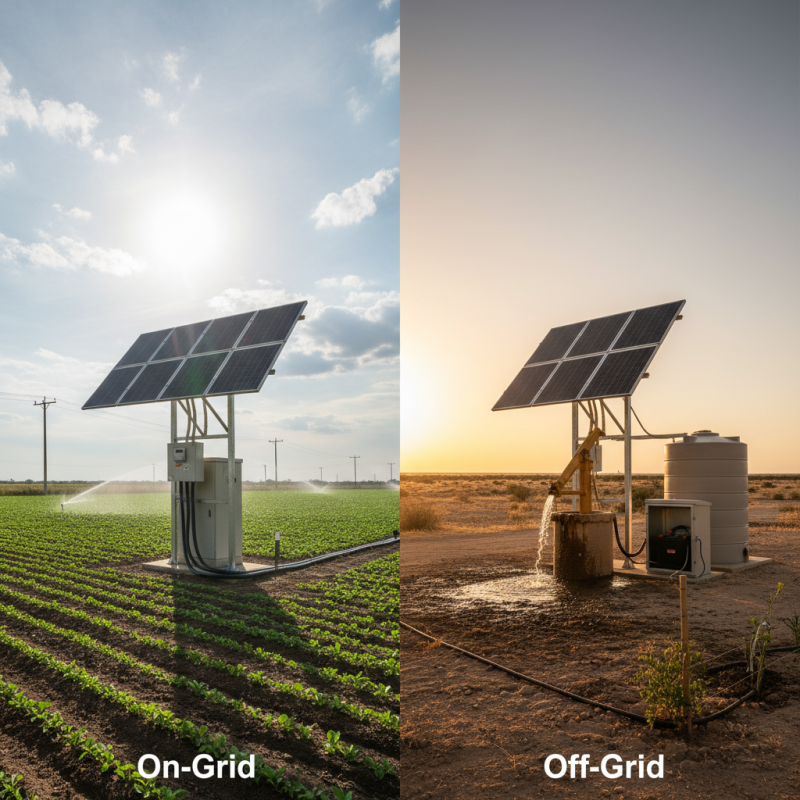
When considering solar pumps, many people wonder, "What is the difference between on-grid and off-grid solar pumps?" This question is crucial for anyone looking to invest in renewable energy. On-grid systems connect to the electrical grid, while off-grid models operate independently. Each option offers unique advantages and challenges.

On-grid solar pumps can be more cost-effective. They use the existing grid to draw power when needed. This ensures a steady supply, especially during cloudy days. Off-grid systems, however, provide complete autonomy. They are perfect for remote areas without grid access. But they often require battery storage, adding to the initial costs and maintenance.

Making the right choice is vital for efficiency and sustainability. While on-grid and off-grid solar pumps both harness solar energy, their applications differ widely. Each has specific benefits and limitations. It's essential to weigh these factors before making a decision. Your specific needs will guide you to the ideal solar pumping solution.
Why Choose Between On-Grid and Off-Grid Solar Pumps?

Advantages of On-Grid Solar Pumps for Sustainable Water Solutions

On-grid solar pumps offer a reliable solution for sustainable water management. They connect directly to the existing electrical grid, allowing users to access a constant power supply. One major advantage is the reduction in operational costs. According to recent reports, on-grid systems can lower energy expenses by up to 30%. This dedicated cost-saving feature makes them appealing for both agricultural use and residential applications.

Moreover, on-grid systems can leverage net metering. This allows excess energy produced during sunny days to be sold back to the grid. Studies have indicated that this can generate significant revenue, often offsetting initial installation costs. However, not all regions have uniform net metering policies, which may limit these benefits. It's essential for potential users to assess their local regulations and incentives.

Yet, the reliance on the grid poses potential challenges. In areas prone to outages, on-grid systems might fall short. Users should weigh the benefits against the risk of power interruptions. The transition to on-grid solutions requires careful planning and consideration of geographic and market factors. Thus, while they promise sustainability, they also demand a nuanced understanding of local energy dynamics.

Why Choose Between On-Grid and Off-Grid Solar Pumps? - Advantages of On-Grid Solar Pumps for Sustainable Water Solutions

Feature On-Grid Solar Pumps Off-Grid Solar Pumps
Initial Cost Moderate High
Maintenance Low Moderate
Energy Source Grid and Solar Solar Only
Water Supply Reliability High Variable
Environment Impact Lower Lower
Scalability High Limited

Exploring the Benefits of Off-Grid Solar Pumps in Remote Areas

In remote areas, water scarcity remains a significant challenge. Off-grid solar pumps emerge as a reliable solution. These systems harness solar energy, providing an independent water source. According to the International Renewable Energy Agency, solar pump installations have surged by 20% annually in off-grid regions. This trend reflects a growing awareness of solar technology's advantages.

Off-grid solar pumps are efficient and environmentally friendly. They reduce reliance on diesel generators, which are costly and polluting. Moreover, maintenance costs are lower. A study from the World Bank indicates that solar pumps can decrease operational costs by up to 75% over five years. This frees up resources for community development.

While the benefits are clear, challenges persist. Customers often face upfront costs, hindering access. Additionally, the technology's effectiveness can be weather-dependent. Communities must consider location-specific factors, such as sunlight availability. Always weighing the pros and cons leads to informed decisions. Embracing off-grid solar pumps requires strategic planning and a willingness to adapt.

Benefits of Off-Grid Solar Pumps in Remote Areas

This chart illustrates the key benefits of off-grid solar pumps in remote areas, highlighting aspects such as cost efficiency, energy independence, environmental impact, maintenance, and installation flexibility. Each benefit is rated based on its significance in off-grid applications.

Key Differences Between On-Grid and Off-Grid Solar Pump Systems

On-grid and off-grid solar pump systems serve different needs in agricultural and residential settings. On-grid systems connect to the main power grid. They work seamlessly, especially during the day when solar power complements the grid supply. A report from the International Renewable Energy Agency (IRENA) indicates that over 70% of all solar installations worldwide are on-grid. This option is often more economical due to lower installation costs and access to grid electricity for nighttime operation.

Off-grid systems stand out for their independence. They rely solely on solar energy and battery storage. This makes them ideal for remote areas where the grid is inaccessible. According to a recent study, off-grid solar pumps can enhance agricultural productivity by up to 40% in arid regions. However, the initial setup cost is significantly higher, and battery maintenance is a challenge. Additionally, some users report issues with inconsistencies in performance during extended cloudy periods. Balancing these factors is crucial when deciding which system suits your needs better.

Factors to Consider When Choosing Between On-Grid and Off-Grid Pumps

When deciding between on-grid and off-grid solar pumps, several key factors come into play. On-grid systems are connected to the local electricity grid. They enable users to draw power from the grid when solar energy isn’t sufficient. This setup often requires less initial investment. According to the Solar Energy Industries Association (SEIA), around 80% of residential solar installations in the U.S. are on-grid systems. They offer reliable access to power and potential savings on energy bills.

On the other hand, off-grid systems operate independently. They provide complete energy autonomy, making them ideal for remote locations. These systems often require higher upfront costs for batteries and storage. However, they can offer significant long-term savings in areas with unreliable grid access. Reports from the International Renewable Energy Agency suggest that off-grid solar systems are increasingly vital in rural development. They can boost economic opportunities and improve access to essential services.

Environmental concerns also influence the choice. On-grid systems can utilize energy from renewable sources, reducing reliance on fossil fuels. Yet, off-grid systems promote sustainability by harnessing local solar energy. The decision ultimately hinges on specific needs, budget, and environmental considerations. A thorough assessment of these factors can lead to a more informed choice between on-grid and off-grid solar pumps.

Cost Analysis: On-Grid vs. Off-Grid Solar Pump Installations

When considering solar pump installations, the cost is a major factor. On-grid solar pumps connect to the utility grid. They can reduce electricity bills and often come with incentives. However, installation costs can be higher for on-grid systems. This is due to additional equipment like inverters and grid connections. For many, this initial investment can seem daunting.

Conversely, off-grid solar pumps operate independently. They do not require a utility connection, which can lower installation costs. However, the upfront price for batteries and charge controllers can add up. An off-grid system might be ideal in remote areas where grid access is limited. It’s worth noting that off-grid systems often require more maintenance, which can lead to additional expenses over time.

Both options have their pros and cons. On-grid systems offer stability with easier maintenance. Off-grid systems provide independence but may involve unexpected costs later. Careful analysis of these factors can lead to better decision-making. Where costs are concerned, the best choice ultimately depends on individual circumstances and long-term goals.

FAQS

: What are the main advantages of on-grid solar pumps?

: On-grid solar pumps offer reliability and lower operational costs, reducing energy expenses by up to 30%.

How does net metering benefit on-grid solar systems?

Net metering allows users to sell excess energy back to the grid, helping offset installation costs.

What challenges might users face with on-grid solar pumps?

Users may experience challenges during power outages if their area frequently issues outages.

What differentiates on-grid from off-grid solar pump systems?

On-grid systems connect to the grid, while off-grid systems rely solely on solar energy and battery storage.

What are the costs associated with on-grid solar pump installations?

On-grid installations may have higher initial costs due to inverters and connection equipment but reduce electricity bills.

How do off-grid solar pumps affect agricultural productivity?

Off-grid solar pumps can enhance productivity by up to 40% in arid regions but require higher initial investment.

What maintenance issues do off-grid systems face?

Off-grid solar systems often involve more maintenance, leading to unexpected costs over time.

Why might some users prefer an off-grid system?

Off-grid systems are ideal for remote locations where grid access is unavailable or undesirable.

How important is geographic consideration for installing solar pumps?

Geographic factors are essential, as they influence the feasibility and effectiveness of each solar pump type.

What should potential users reflect on before choosing a solar pump system?

Users should weigh costs, energy needs, and local regulations to make informed decisions about solar pump installations.

Conclusion

The article "Why Choose Between On-Grid and Off-Grid Solar Pumps?" delves into the various aspects of solar pump systems, highlighting their unique advantages and applications. On-grid solar pumps are particularly beneficial for sustainable water solutions in areas with reliable access to electricity. They enable users to harness renewable energy while remaining connected to the grid, leading to lower energy costs and efficient water management. In contrast, off-grid solar pumps are designed for remote areas lacking stable electricity. These systems provide independence from the grid and are essential for agricultural and domestic water needs in isolated locations.

A critical discussion in the article revolves around the key differences between on-grid and off-grid solar pumps, addressing factors such as installation costs, energy accessibility, and specific use cases. Additionally, it emphasizes the importance of considering various factors when choosing between the two types of pumps. Ultimately, the cost analysis compares on-grid versus off-grid solar pump installations, guiding potential users in making informed decisions based on their unique water pumping requirements. What is the difference between on-grid and off-grid solar pumps? This article provides comprehensive insights to help clarify this distinction.

Oliver

Oliver

Oliver is a seasoned marketing professional with a wealth of expertise in driving brand awareness and engagement. With a deep understanding of our company's product offerings, he consistently delivers high-quality content that enriches our professional blog. His insights not only shed light on......